718-237-2707 NY & NJ

Requirements for Executing a Will in New York

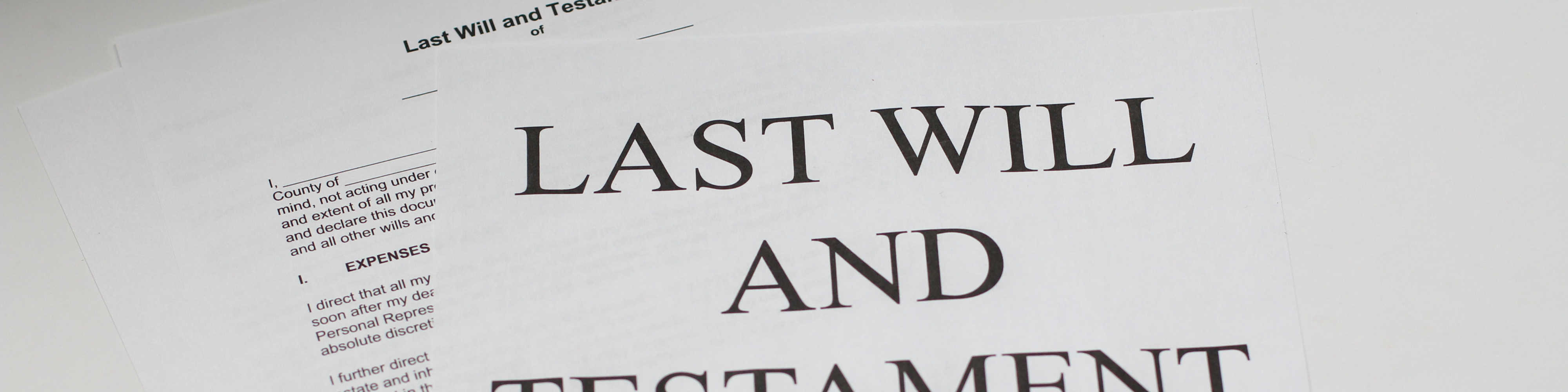
Executing a will is the act of signing a will and making it legally binding. New York law has strict requirements for executing a will. First, a person executing a will must be at least 18 years old. The legal term for the maker of the will is Testator, and in New York a will is formally called a “Last Will and Testament.”

In order to properly sign the will, the Testator must sign “at the end thereof.” Any words that appear on the will following the signature are not given effect. In some instances, an entire will may be declared invalid if there is text following the signature that is so important that not giving it effect would defeat the Testator’s intention.

In order to be valid, a will must also be witnessed. Witnessing is an act which makes the signature on the will legally valid. New York law requires that the Testator must either 1) sign the will in the presence of at least two witnesses or 2) acknowledge his or her earlier signature in the presence of at least two witnesses.

Furthermore, the Testator must communicate to the witnesses that they are witnessing the will by orally declaring the document to be the Testator’s Last Will and Testament. This requirement helps to assure the witnesses that the Testator is aware of the legal importance of the act. Next, the witnesses must both sign the will. Although the witnesses do not have to sign at the same time, the signature of the second witness must be completed 30 days from the first witness’ signature. In New York, this act of signing the will and declaring it to be valid is also called an execution ceremony.

Often, a Testator wants to have his or her will witnessed by his or her friends and family. However, friends and family are also likely to be named beneficiaries in the will. It is important to be aware of how New York law can affect witnesses who are also named beneficiaries. If a named beneficiary is one of the attesting witnesses, the bequest to that beneficiary is void unless there are at least two other disinterested witnesses.

An Estate Planning Attorney can help the Testator ensure that the will, as drafted, accurately reflects his or her wishes. Moreover, having a New York Estate Planning Attorney supervise the execution ceremony can help to ensure that the entire will is valid and that the beneficiaries do not forfeit their share under the will.

Our attorneys will help make certain that the formal requirements are satisfied in accordance with New York law. Should you have any questions about drafting and executing a will or other estate planning documents, please feel free to contact our office.


How Assets Pass to Heirs

How Assets Pass to Heirs

People often have misconceptions about how assets pass after death. Some even believe that if they do not transfer property they own to their children, it will go to the state. There are many instances where misinformed individuals engage in transactions that lead to...

What if Someone Dies without a Will?

What if Someone Dies without a Will?

A will leaves the estate to named persons and organizations. Through a will, the testator can make specific gifts, distribute percentages of the estate, and create trusts for management and future distribution of all or some of the assets of the estate. But what if a...

5 Reasons You Do Not Have an Estate Plan

5 Reasons You Do Not Have an Estate Plan

Most people realize that estate planning is important, but nevertheless procrastinate getting it done. Below are some of the most common excuses for delaying. 1. I am too young It is common for estate planning professionals to say that one is never too young to plan...

Basic Estate Planning Documents

Basic Estate Planning Documents

Estate planning aims to achieve a number of objectives including, but not limited to, designation of guardians, incapacity planning, asset protection, asset distribution and wealth maximization. It may involve various legal and financial instruments as well as complex...

Is a Joint Will a Good Idea?

Is a Joint Will a Good Idea?

A joint will is a will that two or more people make together, rather than each making their own will individually. In practice, a joint will is typically created and signed by a married couple in order to dispose of property that they own together. This may seem like...

No-Contest Clauses in a New York Will

No-Contest Clauses in a New York Will

The purpose of a no-contest, or In-Terrorem, clause in a will is to deter a lawsuit challenging the will. If the person making a will sees potential red flags such as tensions between beneficiaries, he or she may want to include a no-contest clause to minimize...

How to Properly Revoke a Will in New York

How to Properly Revoke a Will in New York

There are various reasons why someone would want to revoke a will. Many, if not most, people make more than one will during their lifetime. Reasons for wanting to create a new will and revoke the old one can include divorce, remarriage, having children, acquiring or...

What to Discuss with a New York Estate Planning Attorney

What to Discuss with a New York Estate Planning Attorney

Estate planning can be overwhelming for many people, in part, because good estate planning involves planning not just for foreseeable circumstances, but for unforeseeable ones as well. Below are several different topics to consider discussing with your New York estate...

How an Elder Law Attorney Can Help You and Your Family

How an Elder Law Attorney Can Help You and Your Family

With the rising aging population, many elderly Americans need help from their family or friends when it comes to their health, financial or other affairs in retirement and old age. They often believe that their family members will be able to take care of any issues...

Things You Should Know About Being a “Fiduciary”

Things You Should Know About Being a “Fiduciary”

You may be asked to be power of attorney for a family member or friend. Your person may be planning for when they might become unable to take care of their affairs. For example, they might become disabled or incapacitated, and they would need a trusted person to step...